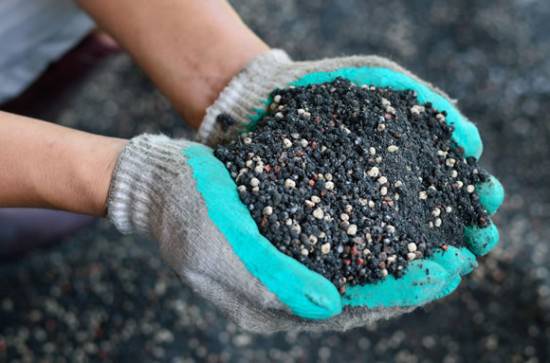
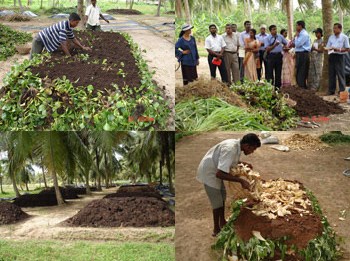
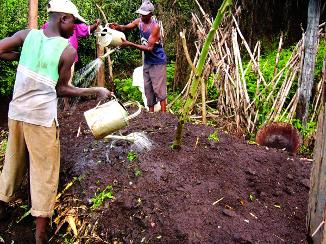
Compost is a key ingredient in organic Farming.At the simplest level, the process of composting requires making a heap of wet organic matter known as green waste (leaves, food waste) and waiting for the materials to break down into humes after a period of weeks or months. Modern, methodical composting is a multi-step, closely monitored process with measured inputs of water, air, and carbon- and nitrogen-rich materials. The decomposition process is aided by shredding the plant matter, adding water and ensuring proper aeration by regularly turning the mixture. Worms and fungi further break up the material. Bacteria requiring oxygen to function ( aerobic bacteria) and fungi manage the chemical process by converting the inputs into heat, carbon dioxide and ammonium. The ammonium (NH+
4) is the form of nitrogen used by plants. When available ammonium is not used by plants it is further converted by bacteria into nitrates (NO−3) through the process of nitrification.
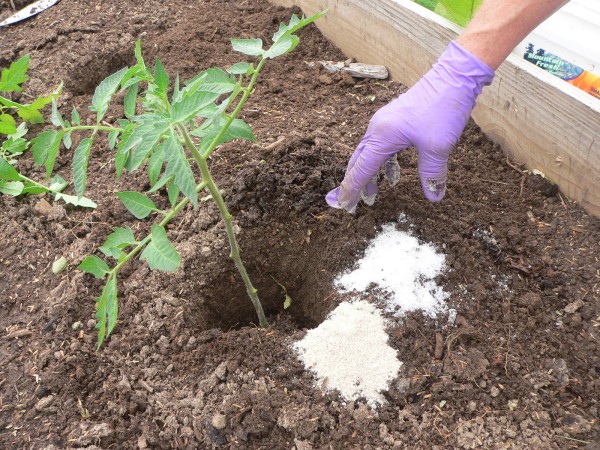
Compost is rich in nutrients. It is used in gardens, landscaping, horticulture and agriculture. The compost itself is beneficial for the land in many ways, including as a soil conditioner, a fertilizer, addition of vital humus or humic acids, and as a natural pesticide for soil.
Benefits of Composting.
It’s easy to understand why people say they would love to compost if they could. It offers a whole list of benefits – for your yard, your wallet, and the Earth.